
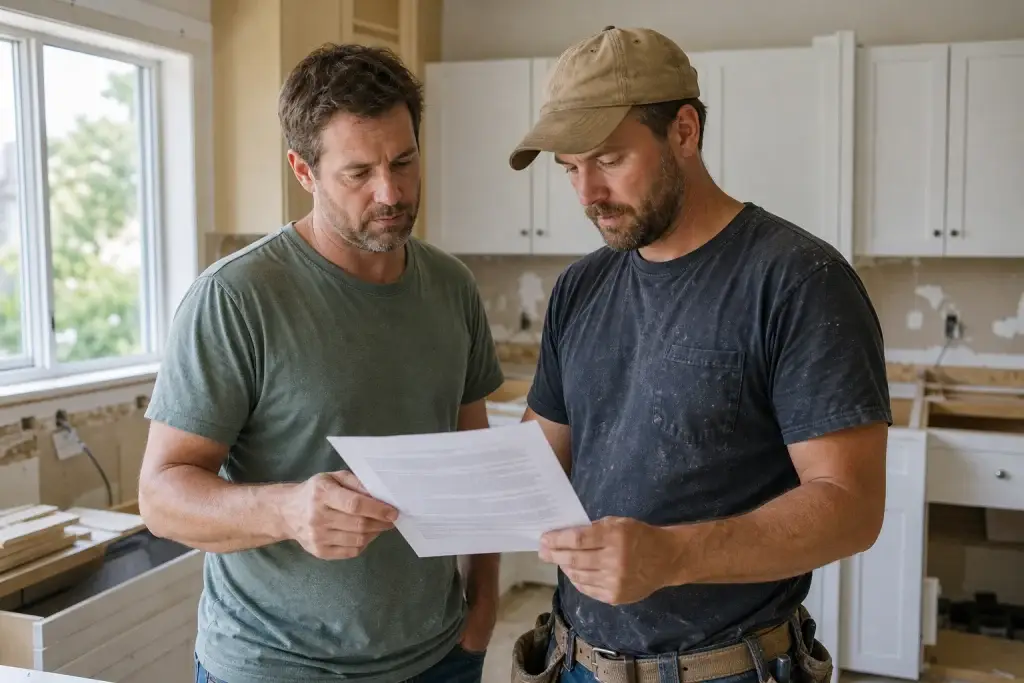
Subcontractor dispute resolution Michigan homeowners rely on usually starts long before anyone mentions a lawyer. Whether a roofer walked off mid-project or a plumber’s invoice does not match the signed estimate, disagreements between homeowners, general contractors, and subcontractors are common on renovation and new-build projects across Northern Michigan. Fortunately, most conflicts can be resolved through clear documentation, direct negotiation, and Michigan’s established legal remedies before anyone sets foot in a courtroom.
This guide walks through the causes of these disputes, the Michigan laws that protect homeowners, and the step-by-step process for resolving conflicts efficiently. In addition, it explains when professional construction project management can prevent disputes from happening in the first place. This matters most for seasonal and remote property owners who cannot monitor a job site every day.
What Is Subcontractor Dispute Resolution in Michigan?
Subcontractor dispute resolution Michigan homeowners use is the structured process of resolving disagreements over payment, workmanship, or scheduling between the parties on a construction project. It generally moves through negotiation, mediation, arbitration, a licensing complaint, or civil litigation, depending on what the contract requires and how serious the issue is.
Because Michigan licenses builders and specialty trades through the state, homeowners have more formal options than a simple handshake agreement. For example, a licensed general contractor is accountable not only to the homeowner but also to the Michigan Department of Licensing and Regulatory Affairs, often called LARA. This accountability layer gives homeowners leverage that is not always available with unlicensed or out-of-state crews.
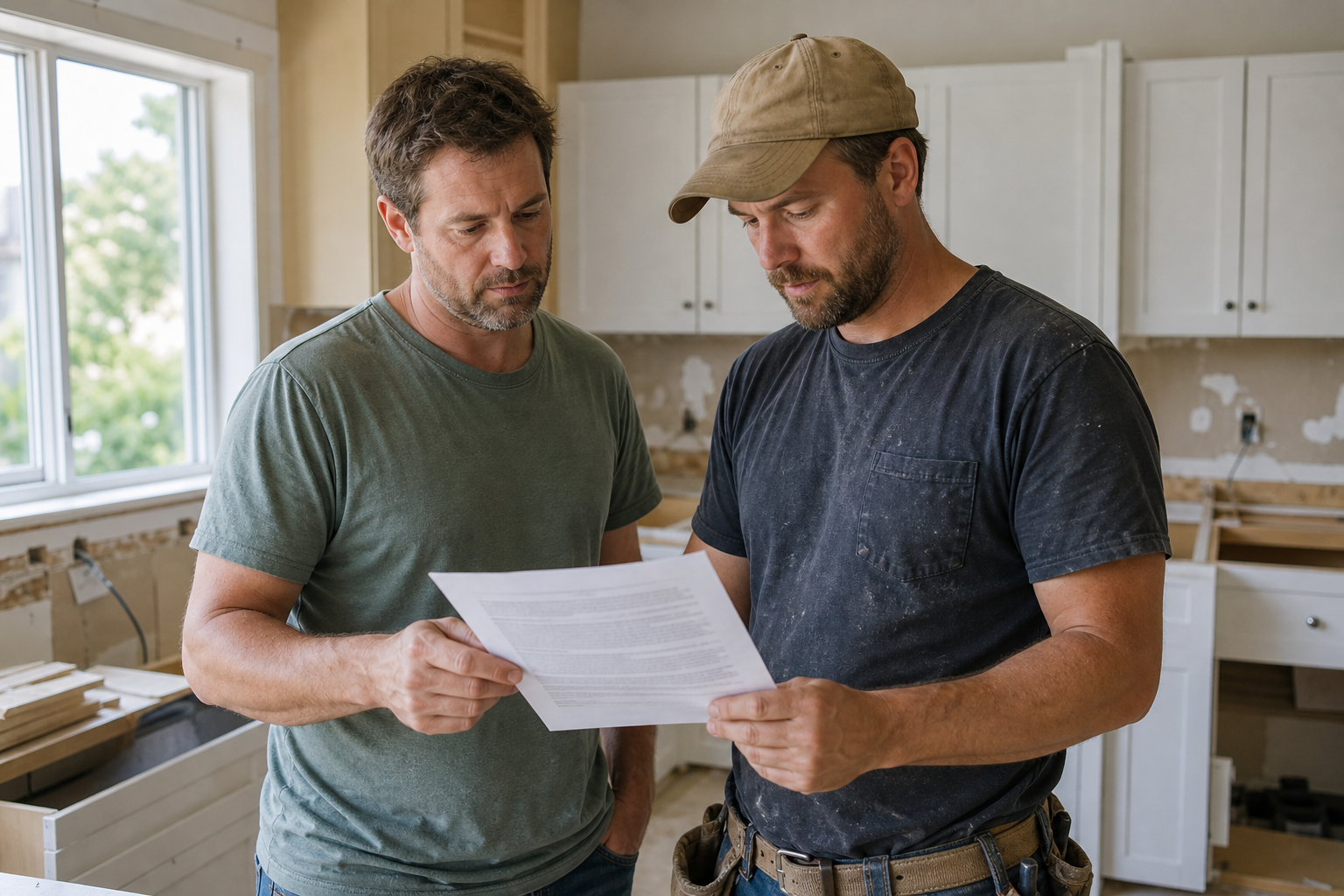
Reviewing the signed contract is usually the first step in subcontractor dispute resolution Michigan projects require.
Common Causes of Contractor Conflicts in Northern Michigan
Most disputes trace back to a handful of recurring problems. Understanding them helps homeowners spot warning signs earlier.
- Unclear or verbal-only scope of work, which leaves room for disagreement about what was actually promised.
- Payment disputes, including draw requests that exceed completed work.
- Missed deadlines, particularly on seasonal properties with a short construction window.
- Substandard workmanship discovered after a subcontractor has already left the site.
- Communication gaps when the homeowner lives remotely or visits only occasionally.
In particular, remote and seasonal owners face a harder version of these problems. Because they cannot check progress in person, small issues sometimes grow into larger disputes before anyone notices. As a result, having a local point of contact who inspects work regularly can make an enormous difference.
Michigan Laws That Shape Dispute Resolution
Michigan provides several legal tools that directly affect how subcontractor disputes play out. Understanding them in advance helps homeowners act within the correct deadlines.
The Michigan Builders Trust Fund Act
The Michigan Builders Trust Fund Act, found at MCL 570.151, requires that payments a homeowner makes toward a construction project be treated as trust funds for paying the subcontractors and suppliers on that job. Consequently, if a general contractor uses those funds for something else and a subcontractor goes unpaid, that can trigger both a civil claim and grounds for a licensing complaint.
Mechanics Lien Deadlines
Under Michigan’s Construction Lien Act, a subcontractor generally must record a claim of lien within 90 days of their last furnishing of labor or materials on the project. This specific statutory window is one of the most important data points for homeowners to know. This is because it affects how quickly unpaid subcontractors can place a legal claim against the property. Homeowners should request lien waivers at every payment milestone to reduce this exposure.
Step-by-Step Process for Resolving a Subcontractor Dispute
When a conflict arises, following a consistent process improves the odds of a fast, fair outcome. Below is the sequence most Michigan construction attorneys and project managers recommend.
- Document the dispute. Record dated photos, a written timeline, and copies of the signed contract and any change orders.
- Review the contract and statutory obligations. Check payment terms, scope language, and trust fund obligations before responding.
- Attempt direct negotiation. Propose a specific, reasonable resolution in writing to the subcontractor or general contractor.
- Preserve lien and payment rights. Track the 90-day mechanics lien deadline and send any required notices.
- Request mediation. Bring in a neutral mediator if direct talks stall, since mediation resolves the majority of construction disagreements without litigation.
- Pursue arbitration if required. Follow the contract’s arbitration clause, if one exists, and prepare documentation for the hearing.
- File a licensing complaint if warranted. Report suspected violations to LARA for formal review.
- Consult an attorney for litigation. Reserve circuit court for cases involving significant money or safety concerns.
When to Escalate: Mediation, Arbitration, or a Licensing Complaint
Not every dispute needs the same level of escalation. The table below compares common paths side by side.
| Dispute Type | Recommended Path | Typical Timeframe |
|---|---|---|
| Minor scheduling or scope disagreement | Direct negotiation | Days to weeks |
| Payment or invoice disputes | Mediation | 1 to 2 months |
| Workmanship defects with contract arbitration clause | Arbitration | 2 to 3 months |
| Licensing or trust fund violations | LARA complaint or litigation | 3 months or more |
Mediation generally costs less than litigation and resolves most construction disputes without a formal ruling. Therefore, it is usually the first formal step homeowners should try once direct negotiation fails. Arbitration, in contrast, produces a binding or non-binding decision from a neutral third party and is typically required only when the subcontractor agreement calls for it.

Mediation often resolves disputes faster and at lower cost than litigation.
How Professional Project Management Prevents Conflicts
Above all, the best way to resolve a subcontractor dispute is to prevent it. A licensed general contractor who manages the project day to day catches scope gaps, verifies invoices against completed work, and documents progress before small issues grow into formal disputes. This is especially valuable for seasonal and remote owners who need remote construction management from a licensed GC rather than occasional check-ins.
Homeowners near Harbor Springs often ask who coordinates vendors and schedules on their behalf while they are away. In those cases, working with a firm offering construction project management near Harbor Springs provides consistent oversight across the entire build. Similarly, owners near Petoskey frequently want to know who manages home renovations for seasonal owners so disputes never reach the point of needing formal resolution.
Furthermore, coordinating multiple trades is often where disputes start, particularly when subcontractors have conflicting schedules. Learning more about how contractor scheduling support works can clarify how a dedicated project manager keeps everyone accountable from the start.
Choosing a Local Partner for Subcontractor Dispute Resolution in Michigan
Summertime Construction LLC, a Michigan licensed builder and general contractor operating since 2017, serves homeowners across Emmet, Cheboygan, and Mackinac Counties. These include Harbor Springs, Cross Village, Alanson, Indian River, Cheboygan, Mackinaw City, and St. Ignace. The company’s full construction project management services are designed specifically to catch scope and payment issues before they turn into disputes. This matters most for seasonal, lakeside, and luxury-property owners who are not on-site every day.
In addition to construction coordination, the company documents job progress with certified inspection methods. These include Spectora digital reporting, FLIR thermal imaging, and DJI drone inspections. This gives homeowners objective evidence if a dispute over workmanship ever arises. For homeowners researching their options locally, Summertime Construction’s website outlines these services in more detail.
Frequently Asked Questions
What is subcontractor dispute resolution in Michigan?
Subcontractor dispute resolution in Michigan is the process of resolving disagreements between homeowners, general contractors, and subcontractors over payment, workmanship, or scheduling. It typically moves through negotiation, mediation, arbitration, licensing complaints, or civil court, depending on the contract and the severity of the issue.
What causes most subcontractor disputes on Michigan homes?
Most disputes stem from unclear scope of work, delayed payments, missed deadlines, or substandard workmanship. Seasonal and remote properties add complexity because owners often cannot inspect progress in person.
How long does it take to resolve a subcontractor dispute?
Direct negotiation can resolve minor disputes within days or weeks. Mediation or arbitration typically takes one to three months, while litigation through Michigan circuit court can take a year or longer.
Does Michigan law require mediation before a lawsuit?
Michigan does not universally require mediation before filing suit, but many construction contracts include a mandatory mediation or arbitration clause. Courts may also order case evaluation in certain civil disputes.
What is the Michigan Builders Trust Fund Act?
The Michigan Builders Trust Fund Act (MCL 570.151) requires contractors to use construction payments to pay subcontractors and suppliers for that specific project. Misusing those funds can support both a civil claim and a licensing complaint.
How do I protect my mechanics lien rights in Michigan?
Under Michigan’s Construction Lien Act, subcontractors generally must record a claim of lien within 90 days of their last furnishing of labor or materials. Homeowners should request lien waivers at each payment stage to avoid unexpected claims.
Can I file a complaint against an unlicensed contractor?
Yes. Homeowners can file a complaint with the Michigan Department of Licensing and Regulatory Affairs if a contractor or subcontractor is unlicensed or has violated state building rules. LARA investigates complaints and can issue fines or suspend licenses.
How much does subcontractor dispute mediation cost in Michigan?
Private mediation generally costs between $150 and $400 per hour, split between the parties, and most disputes settle within one or two sessions. This is typically far less expensive than pursuing litigation through circuit court.
What is the difference between mediation and arbitration?
Mediation uses a neutral facilitator to help both sides reach a voluntary agreement, while arbitration involves a neutral decision-maker who issues a binding or non-binding ruling. Construction contracts often specify which method applies.
Should I hire a construction attorney for a subcontractor dispute?
For disputes involving significant money, liens, or safety defects, an attorney experienced in Michigan construction law is recommended. Smaller disagreements over scheduling or minor workmanship can often be resolved through direct negotiation or project management oversight.
Can a general contractor help resolve disputes with subcontractors?
Yes. A licensed general contractor who manages the project can mediate directly with subcontractors, enforce contract terms, and document issues on the homeowner’s behalf, often preventing disputes from escalating to legal action.
What documentation helps during subcontractor dispute resolution in Michigan?
Written contracts, change orders, payment records, photos, and dated progress reports are the strongest evidence in any dispute. Digital inspection reports and drone or thermal imaging records can further support claims about workmanship.
What happens if a subcontractor abandons a Michigan project?
Homeowners should document the abandonment in writing, notify the general contractor, and consult the contract for remedies. This may include withholding final payment or hiring a replacement subcontractor and seeking reimbursement.
Are remote and seasonal homeowners more vulnerable to contractor disputes?
Yes. Owners who cannot regularly visit their property often discover problems late, which makes dispute resolution harder. Working with a local project manager or key holder reduces this risk by providing on-site oversight and reporting.

Aerial and progress documentation can prevent many disputes before they start.
Key Takeaways
Subcontractor dispute resolution Michigan homeowners pursue does not have to mean an expensive courtroom battle. In most cases, careful documentation, a clear understanding of the Builders Trust Fund Act and mechanics lien deadlines, and a willingness to start with negotiation or mediation lead to a fair outcome. However, when licensing violations or significant losses are involved, escalating to LARA or Michigan circuit court remains an important option.
Above all, the strongest protection against subcontractor disputes is prevention. Working with a licensed, accountable general contractor who documents progress and manages trades closely gives Northern Michigan homeowners, especially seasonal and remote owners, the peace of mind that problems will be caught early rather than discovered after the fact.
Next Steps for Subcontractor Dispute Resolution
Subcontractor dispute resolution starts with clear contracts and good records. For example, we walk the site, listen to your goals and explain each step in plain language. As a result, you know what to expect before any work begins.
In addition, Summertime Construction holds a Michigan residential builder license (License #262100041). Therefore, you can verify our license with the state at any time. To discuss subcontractor dispute resolution on your project, call (231) 498-5600.
Further reading: Dispute resolution (Wikipedia).
